


Clinical Study 1
Impact of light therapy
- 43% improvement in 9 weeks.
- Activation of dormant follicles.



“Un article de l’AFME (Association Française de Médecine Esthétique) qui évoque la photothérapie par LED pour la peau et les cheveux, et mentionne que cette technologie est “utilisée pour traiter divers problèmes cutanés tels que … la perte de cheveux””

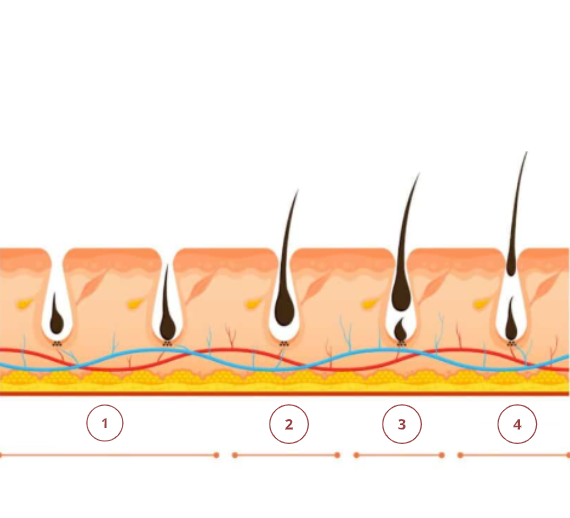
1. Anagen phase: active hair growth.
2. Catagen phase: transition phase where growth stops.
3. Telogen phase: resting phase before hair shedding.
4. Anagen restart: beginning of a new hair cycle, a new hair grows.
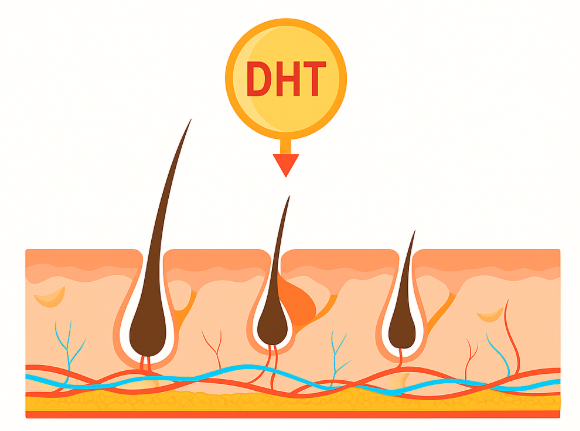
DHT (dihydrotestosterone) is a hormone derived from testosterone responsible for the progressive shrinking of hair follicles.
This hormone is naturally produced by the body. In some people, hair follicles are genetically sensitive to this hormone. When it attaches to the hair root, it reduces blood and oxygen supply, weakening the follicle until it miniaturizes. This very common phenomenon is the main cause of hair loss in both men and women.
DHT surrounds the follicle, eventually suffocating it. Over time, this phenomenon blocks hair growth, causing thinning and then hair loss.
"Scalp LLLT (low-level light therapy) at 660 nm significantly improved hair count in patients with androgenetic alopecia."
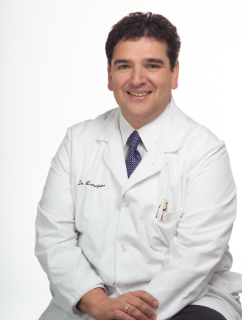
Surgeon and researcher in photobiomodulation, former professor of surgery at the University of Rochester, president of the Lanzafame Artificial Intelligence and Laser Institute, editor-in-chief of the scientific journal Lasers in Surgery and Medicine
"We observed a statistically significant difference in the increase in terminal hair density between subjects treated with the LaserComb and those treated with sham devices."

Dermatologist and Director of the Cosmetic Dermatology Research Institute, principal investigator in several studies on hair loss and hair regeneration.
"This study demonstrated that the laser helmet was significantly superior to the sham device for increasing hair density after 16 weeks and hair diameter after 24 weeks."
Read the study

Associate Professor of Dermatology at the Faculty of Medicine, Mahidol University, Director of the Hair Disorders Research Unit
Backed by extensive research, our advanced LED technology has been clinically proven to stimulate hair growth.


 Rigorous quality testing
Selected Components
Designed for regular home use
Rigorous quality testing
Selected Components
Designed for regular home use
Our LED cap is manufactured in a specialized factory, where each step of the process is rigorously controlled. The diodes used are carefully calibrated to ensure efficient and safe light. Each batch undergoes quality tests to ensure optimal operation and maximum durability. A device designed with care to satisfy you from the very first use.